


- 301 Views
- 12 Min Read
- (0) Comment
Your first international trip is exciting. ✈️🌍
You finally get to experience a new country, explore different cultures, taste new food, meet new people, and create memories far from home. But international travel also comes with more planning than a domestic trip.
A small mistake—such as forgetting an important document, misunderstanding visa requirements, arriving late at the airport, or not checking your baggage allowance—can turn a dream vacation into a stressful experience.
The good news? Most common travel mistakes are easy to avoid when you know what to look out for.
Whether you’re planning your first trip from the UAE to Europe, Asia, the Middle East, or anywhere else in the world, this guide from Rio Travels will help you prepare with confidence.
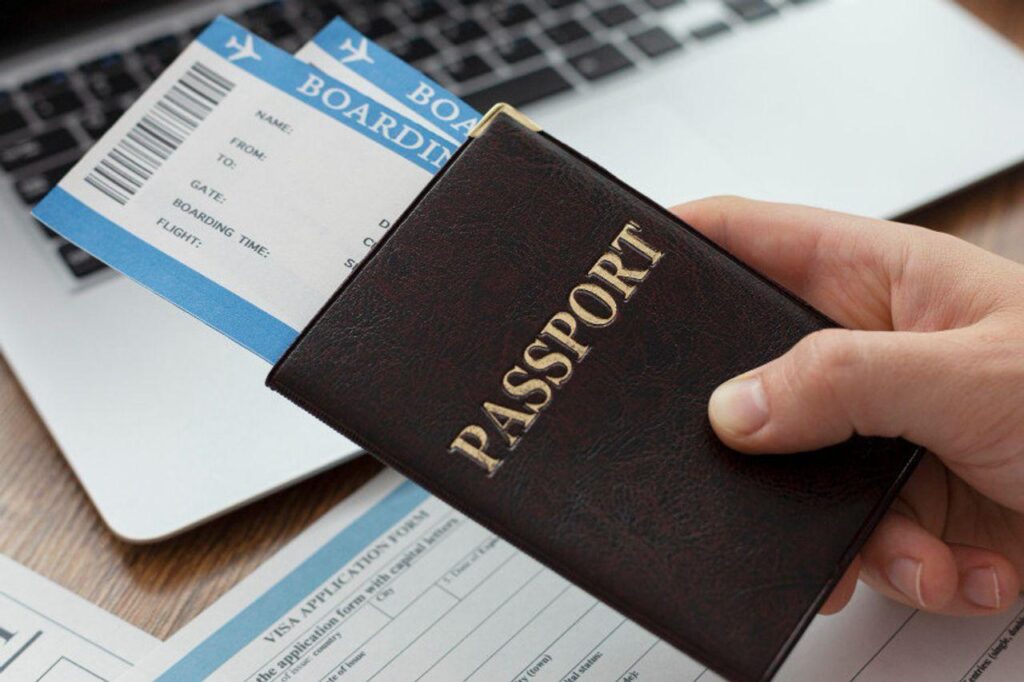
1. Not Checking Visa Requirements Early
One of the biggest mistakes first-time international travelers make is assuming they can simply book a flight and travel.
Every destination has its own entry requirements. Depending on your nationality, residence status, and destination, you may need a visa, an electronic travel authorization, a passport with sufficient validity, proof of accommodation, a return or onward ticket, travel insurance, or other supporting documents.
Visa processing times can also vary.
How to avoid this mistake:
Before booking your trip, check:
- Whether you need a visa
- The type of visa required
- Passport validity requirements
- Required passport pages
- Visa processing time
- Required photographs and documents
- Proof of accommodation
- Return or onward ticket requirements
- Travel insurance requirements
- Any financial or employment documentation
Tip: Don’t leave your visa application until the last minute. Give yourself enough time to prepare documents and deal with unexpected delays.
If you’re unsure about the requirements for your destination, getting assistance from a trusted travel agency can make the process much easier.
2. Traveling With an Expired or Nearly Expired Passport
Having a passport isn’t always enough.
Many countries require travelers to have several months of passport validity remaining after their intended arrival or departure date. Some destinations may also require a certain number of blank pages.
Imagine arriving at the airport excited for your holiday only to discover that your passport doesn’t meet the destination’s entry requirements.
Before you travel:
Check:
✅ Passport expiration date
✅ Number of blank pages
✅ Destination-specific validity requirements
✅ Visa validity and passport details
It’s better to discover a passport problem weeks or months before your trip than at the airport.
3. Booking Your Flight Before Checking Entry Requirements
Finding a great flight deal can be exciting, but booking your ticket before checking whether you are eligible to enter your destination can create unnecessary problems.
For example, travelers sometimes purchase non-refundable tickets before confirming visa eligibility or other entry requirements.
A better approach:
Research → Check requirements → Prepare documents → Confirm your travel plans → Book
If your destination requires a visa, make sure you understand the process and requirements before committing to expensive travel arrangements.
4. Arriving at the Airport Too Late
International flights require more preparation than domestic flights.
You may need to complete check-in, baggage drop-off, immigration, security screening, and potentially additional document checks.
Traffic, parking, long queues, or unexpected delays can also add extra time.
Give yourself enough time.
For international travel, arriving at the airport well before your departure is generally a smart choice. Your airline may also have specific check-in and baggage-drop deadlines, so always check your booking information.
Remember:
Your flight won’t wait if you’re stuck in traffic. ✈️

5. Ignoring Your Airline’s Baggage Rules
Another common mistake is assuming every airline has the same baggage allowance.
They don’t.
Your baggage allowance may depend on:
- Airline
- Route
- Fare type
- Cabin class
- Frequent-flyer status
- Number and size of bags
Excess baggage fees at the airport can be expensive.
Before packing, check:
- Checked baggage allowance
- Carry-on allowance
- Maximum bag dimensions
- Maximum weight
- Personal-item rules
- Restricted items
Weigh your luggage before leaving home if possible.
A few minutes of preparation can save you from unexpected airport charges.
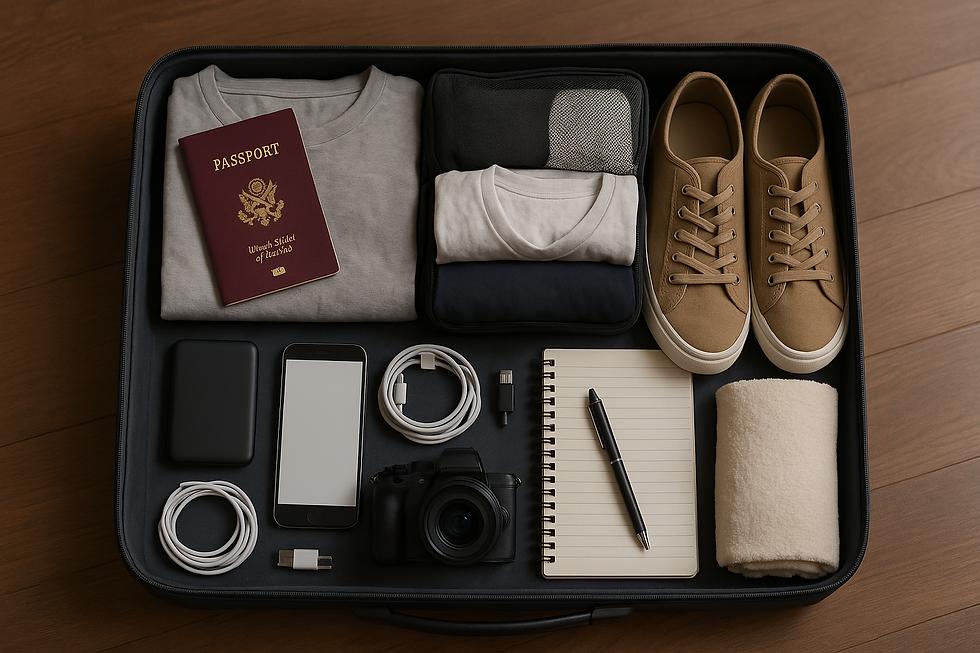
6. Packing Too Much
First-time travelers often pack as if they’re moving to another country.
You probably don’t need five pairs of shoes, an entire wardrobe, or products you can easily purchase at your destination.
Overpacking can make your trip harder because you’ll have to carry heavy luggage between airports, hotels, taxis, trains, and attractions.
Pack smarter:
Bring versatile clothing that can be mixed and matched.
Prioritize:
- Important documents
- Essential medications
- Phone and chargers
- Appropriate clothing
- Comfortable shoes
- Toiletries
- Travel adapters
- Necessary electronics
Check the weather forecast before packing rather than guessing what the destination will be like.
7. Forgetting Important Travel Documents
Your passport isn’t the only document you may need.
Depending on your destination, you may need:
- Visa
- Flight tickets
- Hotel confirmation
- Travel insurance
- Return or onward ticket
- Identification documents
- Vaccination or health documents, where applicable
- Emergency contact information
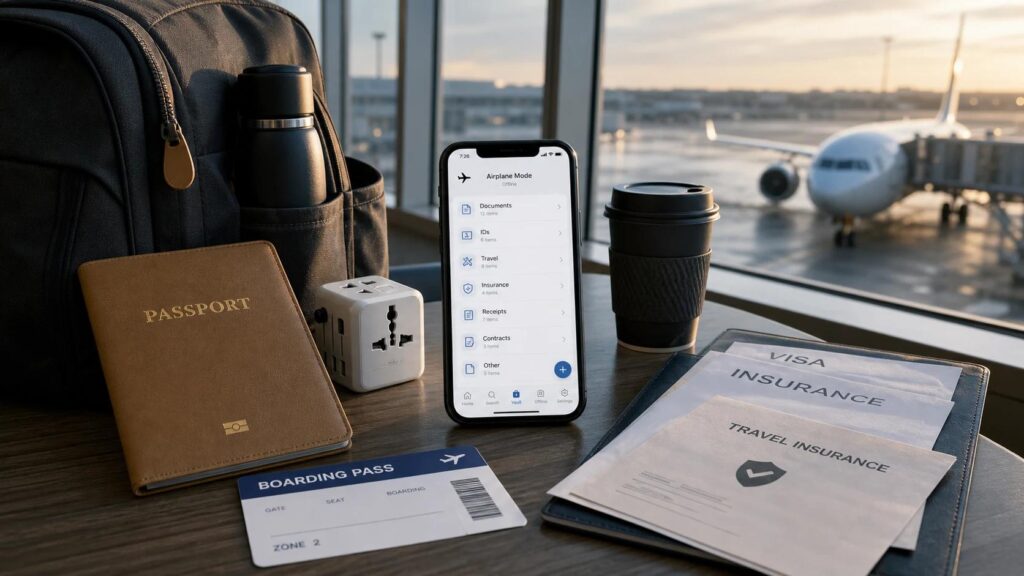
Keep digital copies of important documents in a secure location, and consider carrying printed copies of essential documents as a backup.
Never rely on just one copy stored on your phone.
8. Not Having Travel Insurance
Some travelers skip travel insurance because they think nothing will go wrong.
Hopefully, nothing does—but international travel can involve unexpected situations.
Travel insurance may provide coverage for certain situations such as medical emergencies, trip interruptions, baggage problems, or travel delays, depending on the policy.
Before purchasing a policy, carefully check what is actually covered, including exclusions, limits, and claim requirements.
For certain destinations, insurance may also be part of the travel or visa requirements.
9. Forgetting to Check Your Destination’s Weather
You may be leaving the UAE in warm weather and arriving somewhere experiencing rain, cold temperatures, or even snow.
Don’t assume the weather at your destination will be similar to the weather at home.
Before your trip:
Check:
🌡️ Temperature
🌧️ Rain forecast
❄️ Snow conditions
☀️ UV levels
💨 Wind conditions
👕 Appropriate clothing
Weather can affect what you pack, what activities you plan, and how you get around.
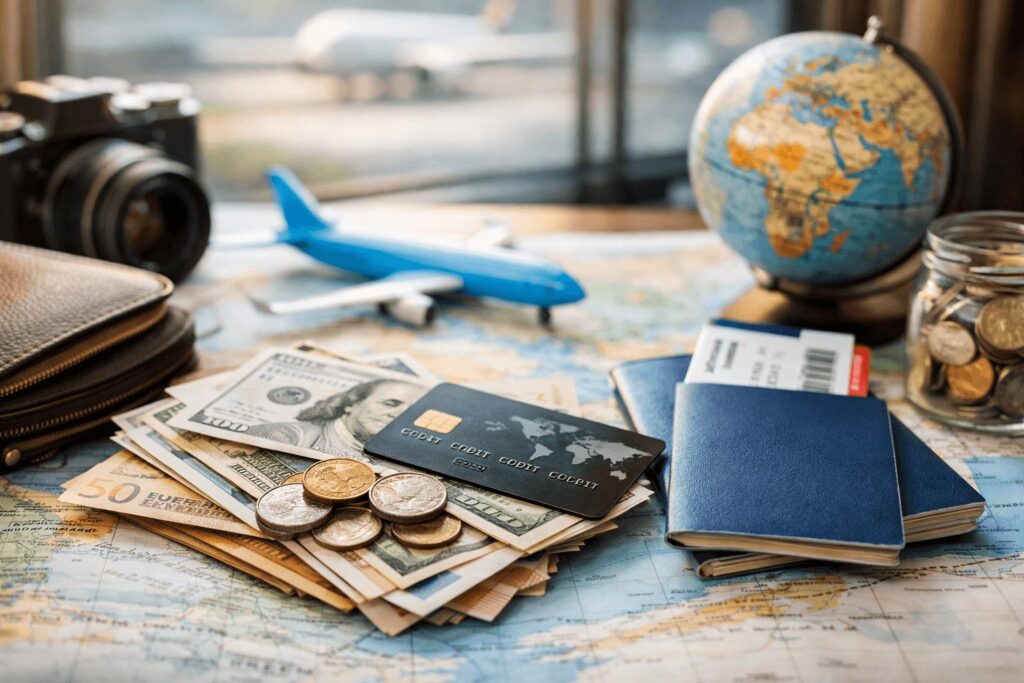
10. Not Informing Your Bank About Your Trip
Imagine arriving in another country and discovering that your card isn’t working.
Some banks may flag unexpected overseas transactions as suspicious.
Before traveling, check with your bank or card provider about international transactions, foreign exchange fees, ATM fees, and whether you need to enable international usage.
It’s also smart to carry more than one payment method.
For example:
- Main debit or credit card
- Backup card
- Some local currency
- Emergency funds
Avoid keeping all your money and cards in one place.
11. Forgetting to Carry Some Local Currency
Cards and mobile payments are increasingly common around the world, but cash can still be useful.
Small businesses, public transportation, markets, tips, vending machines, or places with limited card facilities may require cash.
You don’t necessarily need a large amount.
Having some local currency when you arrive can be helpful for immediate expenses such as transportation, food, or small purchases.
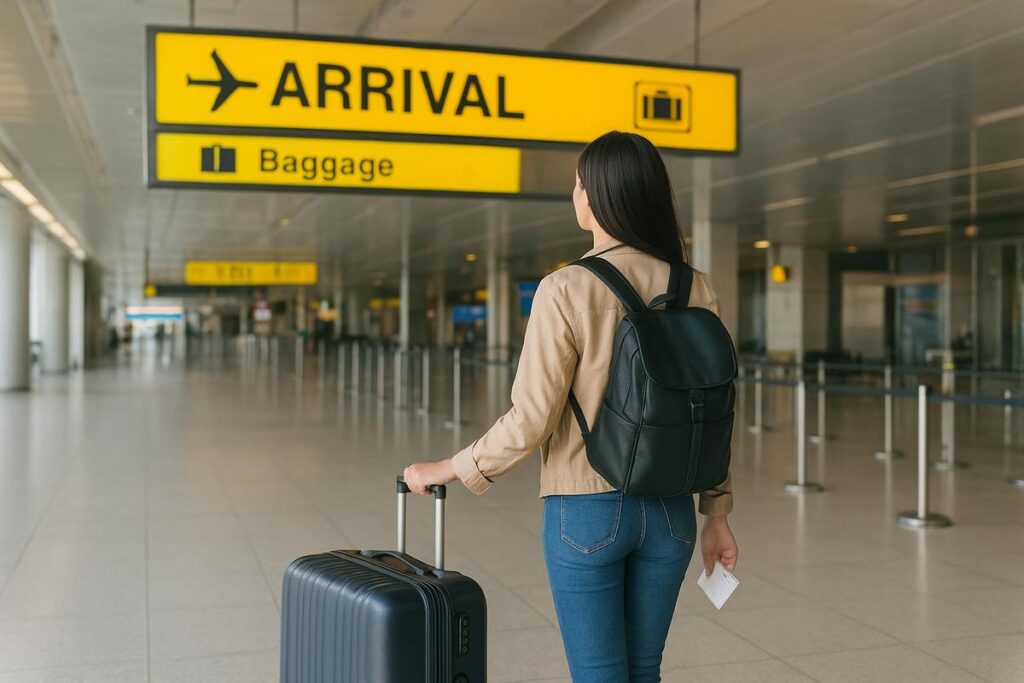
12. Not Checking How You’ll Get From the Airport to Your Hotel
After a long international flight, the last thing you want is to arrive at your destination without knowing how to reach your accommodation.
Before your trip, research:
- Airport transfer options
- Public transportation
- Taxi services
- Ride-hailing availability
- Approximate travel time
- Estimated transportation costs
Save your hotel’s address and contact details on your phone.
It’s also useful to have the address available offline in case you don’t immediately have mobile data.
13. Depending Completely on Mobile Data
Your phone may work abroad—but don’t assume it will.
International roaming charges can be expensive, while some destinations may offer affordable local SIM cards or eSIM options.
Before leaving, check:
- International roaming
- eSIM compatibility
- Local SIM options
- Wi-Fi availability
- Offline maps
Download important maps and travel information before your flight so you can access them even without an internet connection.
14. Not Checking Plug and Voltage Compatibility
Different countries use different electrical plugs and voltage standards.
Your phone charger may work perfectly with the correct adapter, but other devices may have different voltage requirements.
Research the electrical system at your destination and bring an appropriate travel adapter.
A small adapter can save you from a major inconvenience.
15. Planning Every Minute of Your Trip
Planning is important—but overplanning can make your vacation exhausting.
Some travelers create an itinerary packed from morning until night.
By the third day, they’re exhausted.
Instead, give yourself some flexibility.
Choose the attractions you really want to see, but leave time for:
- Relaxing
- Exploring neighborhoods
- Trying local food
- Shopping
- Unexpected discoveries
- Rest
A good international trip isn’t about checking every box. It’s about enjoying the experience.
16. Trying to Visit Too Many Destinations
First-time travelers often want to see everything.
Paris today. Rome tomorrow. Barcelona the next day.
While it may look exciting on paper, constantly changing hotels and transportation can make your trip tiring and expensive.
If you have limited vacation time, consider spending more time in fewer places.
You’ll have more time to actually experience each destination instead of constantly traveling between them.
17. Ignoring Local Customs and Laws
Every country has its own culture, customs, and laws.
Something that’s normal at home may be inappropriate—or even illegal—somewhere else.
Before traveling, research basic information about your destination.
Learn about:
- Dress expectations
- Public behavior
- Photography rules
- Religious customs
- Tipping practices
- Alcohol restrictions
- Local laws
- Cultural etiquette
Being respectful of local culture makes your trip more enjoyable and helps you avoid unnecessary problems.

18. Not Keeping Emergency Information Handy
Hopefully, you won’t need emergency assistance during your trip.
But it’s better to be prepared.
Save important numbers such as:
📞 Local emergency services
🏥 Nearest hospital
🏨 Hotel
✈️ Airline
🏦 Bank or card provider
🛂 Your country’s embassy or consulate
You should also keep an emergency contact from home easily accessible.
19. Sharing Too Much Travel Information Publicly
It’s exciting to announce that you’re going on vacation, but be careful about sharing sensitive information publicly.
Avoid posting photos of documents containing personal information, passport numbers, booking references, or other sensitive details.
You should also think carefully before publicly announcing that your home will be empty for an extended period.
Enjoy sharing your travel memories—but protect your personal information.
20. Not Checking Your Flight Details
A simple mistake like checking the wrong departure time can ruin an entire trip.
Always double-check:
- Departure date
- Departure time
- Airport
- Terminal
- Flight number
- Baggage allowance
- Check-in requirements
This is especially important when your destination has multiple airports.
Also remember that flight times are usually displayed in the local time of the airport.
21. Forgetting About Time Zones
Jet lag isn’t the only problem with changing time zones.
Time differences can affect your communication, reservations, airport transfers, and itinerary.
Before traveling, check the time difference between your departure location and destination.
If you’re calling family or your workplace back home, remember that they may be several hours ahead or behind you.

22. Not Making Copies of Important Information
Losing your passport, phone, wallet, or luggage can be stressful.
Having backup information makes recovery much easier.
Keep secure copies of:
- Passport
- Visa
- Travel insurance
- Flight booking
- Hotel booking
- Emergency contacts
- Important identification documents
Store digital copies securely and keep physical copies separate from the originals when appropriate.
23. Forgetting to Check Your Visa Conditions
Getting a visa doesn’t necessarily mean you can stay indefinitely or do anything you want in the destination country.
Pay attention to:
- Validity dates
- Permitted length of stay
- Number of entries
- Purpose of travel
- Extension rules
- Conditions attached to the visa
For example, a visa may allow multiple entries but limit how long you can stay during each visit.
Always understand the conditions before traveling.
24. Assuming Everything Will Go According to Plan
Travel rarely goes perfectly.
Flights can be delayed. Luggage can arrive late. Weather can change. Attractions can close. Transportation can be disrupted.
Don’t let a small problem ruin your entire trip.
Build some flexibility into your schedule and keep important reservations, contacts, and information accessible.
The goal isn’t to eliminate every possible problem.
The goal is to be prepared enough to handle problems calmly.
First International Trip Checklist
Before leaving home, use this quick checklist:
✈️ Travel Documents
☐ Passport checked
☐ Visa checked
☐ Passport validity confirmed
☐ Flight booking confirmed
☐ Hotel booking confirmed
☐ Travel insurance arranged
☐ Copies of important documents saved
🧳 Luggage
☐ Baggage allowance checked
☐ Luggage weighed
☐ Essential items packed
☐ Medicines packed
☐ Travel adapter packed
☐ Valuables kept safely
💳 Money
☐ Bank notified if necessary
☐ International card usage checked
☐ Some local currency prepared
☐ Backup payment method available
📱 Phone
☐ Roaming checked
☐ eSIM/SIM option researched
☐ Important contacts saved
☐ Offline maps downloaded
☐ Chargers packed
🌍 Destination
☐ Weather checked
☐ Local customs researched
☐ Transportation from airport planned
☐ Emergency numbers saved
☐ Important visa conditions reviewed
Final Thoughts
Your first international trip should be exciting—not stressful.
You don’t need to know everything about traveling before your first trip. You simply need to prepare properly and avoid the most common mistakes.
Check your visa requirements early, make sure your passport is valid, understand your airline’s baggage rules, organize your documents, prepare your finances, research your destination, and leave enough flexibility in your itinerary.
Most importantly, don’t be afraid to ask for professional travel assistance when you need it.
At Rio Travels, we understand that international travel can feel overwhelming, especially when it’s your first time. From visa assistance and travel arrangements to holiday packages and travel guidance, having the right support can make the journey much smoother.
Plan smart. Travel prepared. Enjoy the journey. ✈️🌍
Ready for Your Next International Adventure?
Whether you’re planning a family holiday, visiting friends and relatives, taking your first overseas vacation, or simply looking for a new destination to explore, Rio Travels is here to help you prepare for your journey.
📍 Rio Travels — Making Your Travel Dreams a Reality.
Your next adventure starts with the right preparation.